

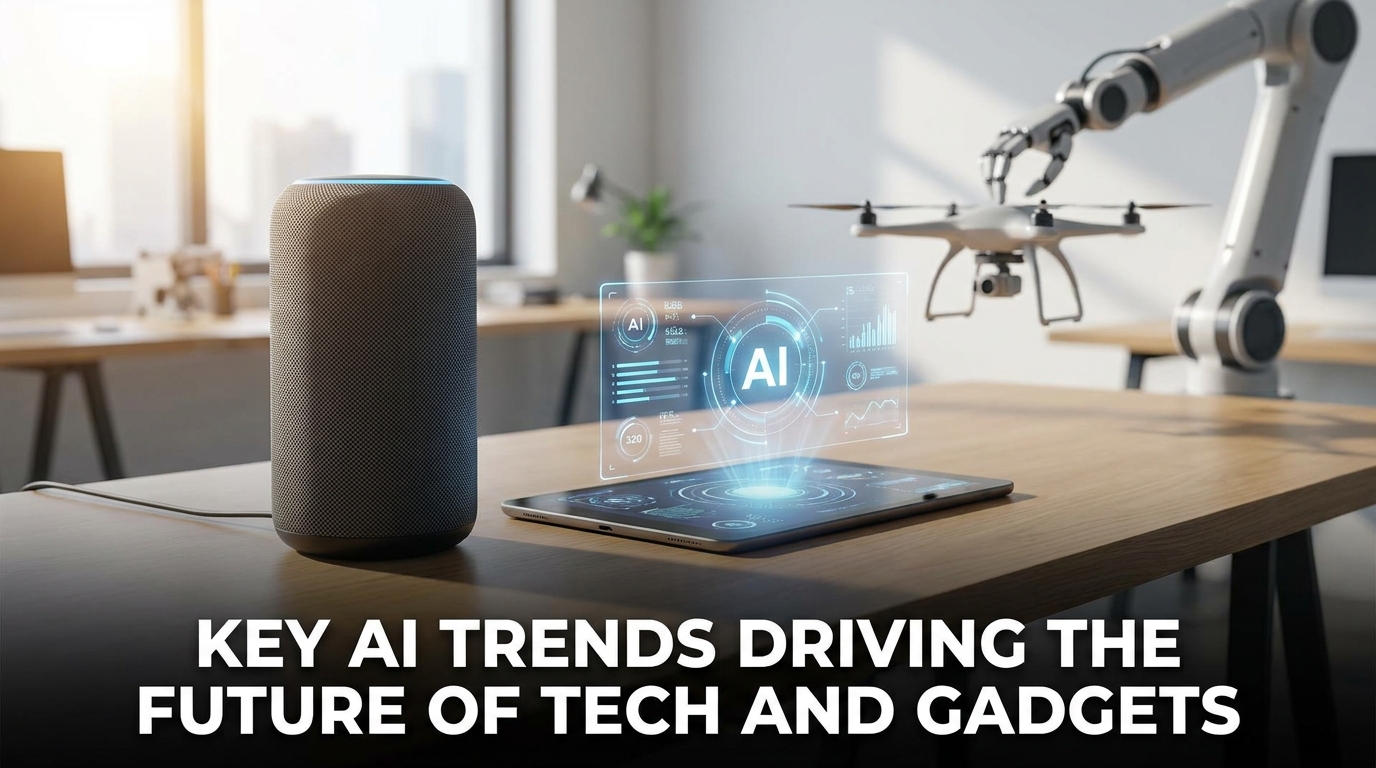
Artificial intelligence development accelerates rapidly every single year, so it fundamentally transforms how individuals interact with modern digital systems. Consequently, the arrival of smart innovations delivers a tangible impact on personal computing and automated workflows. Various commercial industries actively adopt intelligent systems because these modern tools boost daily operational efficiency. Meanwhile, everyday consumers experience major transformations in the electronic hardware that they rely on daily. Therefore, understanding these prevailing AI trends remains essential for anyone who wants to stay competitive amidst continuous technological shifts.
Today, global electronics manufacturers compete fiercely because they want to speed up the rollout of responsive, autonomous products. Furthermore, engineers now move intensive data processing routines directly inside consumer hardware rather than relying on distant cloud servers. This engineering evolution brings fundamental structural shifts across the entire technology ecosystem. In addition, these localized advancements empower regular users with unprecedented computational capabilities on their own personal hardware.
Core Shifts in AI Trends Across Personal Hardware
The Rise of On-Device Processing in Modern Devices
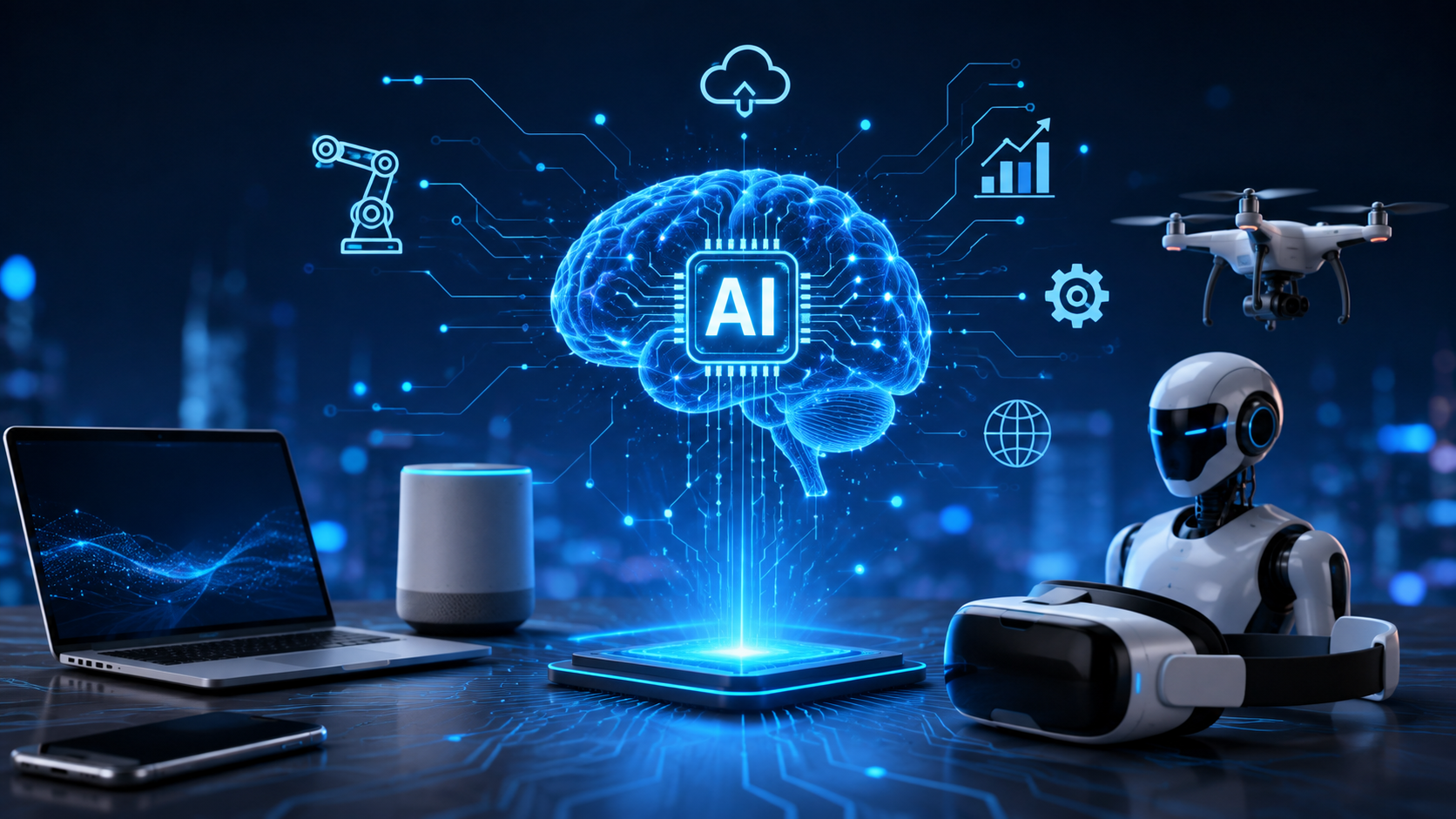
On-device computing fundamentally alters how consumer electronics operate during daily tasks. Previously, simple voice recognition and image analysis required continuous internet connections to communicate with distant servers. Today, however, dedicated processors known as Neural Processing Units run complex algorithms directly on laptops and portable smartphones. Therefore, this modern architecture offers substantial advantages in overall speed, local responsiveness, and personal data protection. In addition, demanding machine learning tasks execute with remarkable power efficiency, so they preserve valuable battery reserves for other vital daily activities.
Integrating Generative Intelligence into Everyday Applications
Recent generative breakthroughs make digital content production accessible to everyday computer users across the globe. For example, creative photo editing software, office suites, and communication platforms now feature integrated smart assistants natively. Because software engineers build these intuitive tools directly into standard programs, individuals easily draft comprehensive documents, summarize long reports, or manipulate graphics using basic text prompts. Furthermore, major software platforms continuously refine their underlying language models to deliver intuitive user interactions. As a result, digital interfaces feel collaborative, and they drastically reduce the time people require for repetitive tasks.
Evolution of Smart Hardware and Consumer AI Gadgets
The Impact of New Technology 2026 on Wearables
Hardware development no longer concentrates exclusively on sharper displays or larger physical battery capacities. Instead, delivering responsive machine learning experiences acts as the primary performance benchmark for global electronics manufacturers. Within the wearable device sector, the introduction of new technology 2026 transforms ordinary smartwatches into comprehensive personal health monitoring centers. Specifically, advanced biometric sensors collaborate with intelligent algorithms to evaluate cardiac health, sleep stages, and physical stress levels accurately. Rather than simply logging historical movements, these portable AI gadgets proactively detect subtle anomalies and provide actionable lifestyle guidance.
Intelligent Automation Across Connected Homes
Smart home ecosystems now function autonomously without requiring constant manual input from homeowners. For instance, connected lighting networks, indoor climate appliances, and security hardware learn behavioral patterns by observing regular domestic schedules. Therefore, ambient room temperatures and lighting levels adjust dynamically throughout the day to optimize personal comfort. Moreover, modern surveillance cameras accurately distinguish between family members, domestic pets, and external security hazards. Homeowners also improve residential energy efficiency significantly through automated power management algorithms, which makes modern living spaces sustainable, comfortable, and remarkably secure.
Advanced Software Ecosystems and Underlying AI Technology
The Role of Foundational Large Language Models
Modern software architectures continue to evolve around powerful computational infrastructures that industry pioneers develop. Major platforms that organizations such as OpenAI and Google Gemini develop establish the foundational groundwork for countless specialized software applications. Furthermore, their advanced multi-modal models analyze written text, audio streams, visual imagery, and programming scripts simultaneously. Consequently, this comprehensive multi-modal support enables third-party software to respond dynamically to complex user inputs. Thus, modern professionals experience the practical benefits of advanced AI technology across virtually every commercial industry vertical.
Advancements in Neural Networks and Machine Learning
Sustained scientific research into machine learning and multi-layered neural architectures yields highly capable analytical tools. Modern computing platforms analyze vast data collections in fractions of a second so they can identify subtle operational trends. In addition, natural language processing models replicate human conversational nuances with remarkable fidelity. Visual recognition algorithms on contemporary camera systems achieve exceptional precision through continuous model refinement. Thus, autonomous navigation systems and medical diagnostic tools interpret physical surroundings with dependable accuracy, which expands productive horizons for future software development.
Industrial Automation and Digital Transformation
Streamlining Complex Workflows Across Sectors
Implementing automated intelligence accelerates digital modernization across diverse industrial disciplines. Modern software platforms execute demanding diagnostic routines, comprehensive risk assessments, and financial forecasting with minimal human oversight. Therefore, corporate teams save valuable working hours and concentrate primarily on high-level strategic planning. In commercial manufacturing facilities, automated robotic arms inspect component quality continuously along active assembly lines. Consequently, this automated oversight reduces operational waste while elevating manufacturing output standards, which ensures global supply chains achieve greater overall productivity.
Data Privacy Challenges and Security Standards
Rapid technological expansion naturally introduces notable challenges regarding confidential user information management. Gathering extensive behavioral data requires robust legal frameworks and responsible development protocols from software vendors. Therefore, enterprise organizations continuously upgrade data encryption standards to protect proprietary databases from unauthorized external intrusion. In addition, stricter international compliance regulations take effect worldwide to protect public privacy rights actively. Meanwhile, hardware vendors implement local isolation techniques to ensure sensitive personal records remain confined within local user devices securely.
Preparing for the Smart Technological Future
Recent artificial intelligence innovations permanently redefine the modern digital computing landscape. Moving computational workloads directly to local hardware ensures optimal operational responsiveness while upholding strict personal privacy standards. To capitalize fully on these advancements, consumers select hardware ecosystems that provide consistent firmware updates and dedicated neural processing chips. By adopting modern smart systems thoughtfully, anyone can cultivate a highly productive, efficient, and secure digital lifestyle.
Frequently Asked Questions
What does on-device processing mean in modern consumer devices?
On-device processing describes machine learning computations that run directly on local hardware chips without sending private data to remote cloud servers.
How do smart gadgets assist with everyday routines?
Modern gadgets automate repetitive personal tasks, optimize device power consumption, and analyze wellness metrics to improve daily lifestyle habits actively.
Does consumer AI technology protect personal privacy?
Data privacy depends strictly on system design, though on-device computing provides superior protection because it keeps sensitive information within local physical hardware exclusively.
What distinguishes generative systems from standard machine learning?
Standard machine learning primarily analyzes existing data to make predictions, whereas generative systems create entirely new text, images, or audio content autonomously.
Why do smart homes need artificial intelligence capabilities?
Artificial intelligence allows smart homes to learn occupant schedules and adjust climate or lighting automatically, so they maximize energy efficiency without requiring manual input.