

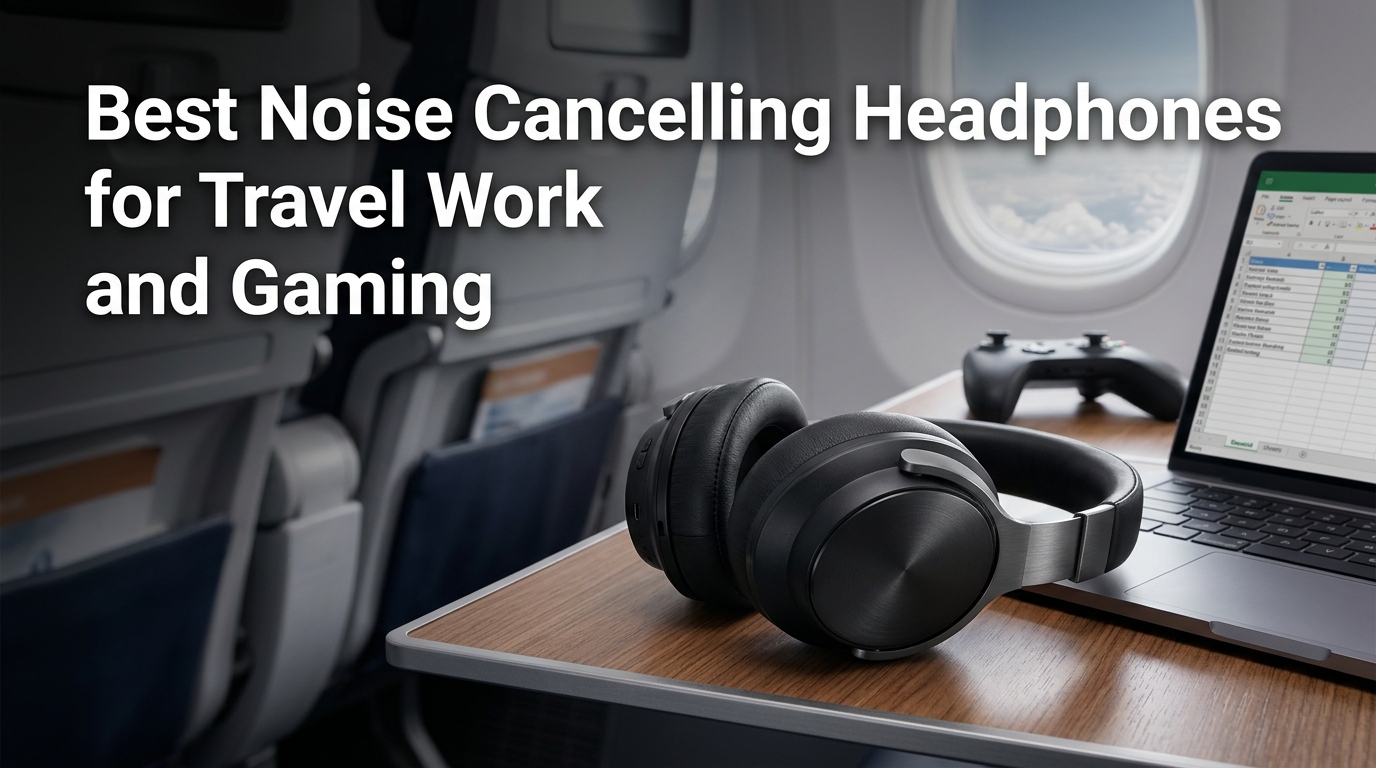
Enjoying music without being disturbed by ambient noise has become an essential need for many. Noise cancelling headphones offer a primary solution for creating a quiet listening space anywhere. Active noise cancellation (ANC) technology can block external sound frequencies, from the rumble of engines to surrounding conversations. However, choosing the right product requires a deep understanding of sound isolation performance and device durability for daily use.
Laboratory audio testing and real-world usage trials prove that not all ANC systems function in the same way. Some products excel at reducing low frequencies, while others are more optimal for handling high frequencies. This guide reviews the real performance of top audio devices based on acoustic testing across various environmental conditions.
Acoustic Testing and Real-World Noise Reduction Methodology
Wireless noise-cancelling headphones are evaluated by testing sound frequencies using artificial ear simulation tools. The assessment focuses on how much external sound waves can be suppressed by a combination of passive isolation and ANC technology features.
Each unit is tested in scenarios tailored to daily user activities. Testing parameters include audio frequency response, signal distortion levels, and battery consumption while the noise-cancelling feature is continuously active.
Sound Isolation Performance in Aviation Environments
The rumble of aircraft engines falls within the low-frequency range of approximately 100 Hz to 500 Hz. In this area, the active noise cancellation feature works highly effectively by emitting inverted-phase sound waves to cancel out noise.
Testing in a cabin simulation chamber shows that premium over-ear noise-cancelling headphones can reduce noise by up to 25 decibels. This result makes long-haul travel feel much quieter and significantly reduces hearing fatigue.
Effectiveness of Noise Reduction in Cafes and Workspaces
Crowded cafe environments present different challenges because noise is dominated by the clinking of cups and human chatter. This noise in the mid-to-high frequency range requires a combination of tight ear cushions and fast digital signal processing.
Tests show that ergonomic ear pads provide passive isolation that helps block high-frequency sound waves. Meanwhile, artificial intelligence algorithms on the audio chip actively filter out background noise without altering the character of the music being played.
Battery Durability and Active Feature Power Consumption
Continuous activation of internal microphones and noise-cancelling processors impacts battery life. Therefore, battery life testing is conducted by playing audio at 75 percent volume with the noise-cancelling feature fully activated.
Most modern best noise-cancelling headphones can last between 28 and 40 hours on a single charge. Fast charging has also become a new standard, where a 10-minute charge can provide up to 5 hours of usage.
Summary of Noise-Cancelling Performance Metrics
| Performance Aspect | Typical Range/Observation | Key Benefit |
|---|---|---|
| Battery Life | 28-40 hours | Extended usage without frequent charging. |
| Low Frequency Noise Reduction | Up to 25 dB | Effective for airplane engine rumble. |
| Fast Charging | 10 minutes = 5 hours usage | Convenient for quick power-ups. |
| Comfort Material | Memory foam & synthetic leather | Optimized seal and long-term comfort. |
Sound Characteristics and Long-Term Usage Comfort
Great noise-cancelling performance must be balanced with clear sound reproduction quality and a comfortable physical design.
Audio Processing Quality and Soundstage Width
Poorly performing noise-cancelling systems often leave an impression of air pressure on the ears or alter the character of the bass frequency response. High-end devices utilize advanced acoustic engineering components to maintain the purity of the audio signal.
Support for spatial audio features also expands the depth of the soundstage, making musical instruments sound naturally spread around the listener. This provides a more vibrant music listening experience that does not cause ear fatigue quickly.
Ergonomic Design and Ear Pad Materials
Physical comfort determines how long a device can be worn without causing head fatigue. Even weight distribution on the headband and an appropriate clamping force are the keys to comfort.
The use of memory foam covered with soft synthetic leather helps create an airtight seal around the ears. This seal not only optimizes the noise-cancelling function but also prevents overheating when used for working all day.
Flexibility of Ambient Sound Mode Features
In certain situations, users still need to hear their surroundings without removing the device. The ambient sound mode feature uses external microphones to stream outside sound directly into the ears naturally.
This feature is very useful when you need to hear announcements at a train station or during short conversations with coworkers. Transitions between full noise-cancelling mode and transparency mode can now run automatically based on user location.
Supporting Feature Integration for Productivity and Hobbies
Beyond listening to music, these devices are expected to perform well for voice calls and gaming activities. The presence of beamforming microphone technology ensures the user’s voice is heard clearly during online meetings in crowded places.
Bluetooth multi-point connectivity also facilitates automatic connection switching between work laptops and smartphones. For gamers, the availability of a low-latency physical audio cable is a crucial value-add.
Audio Setting Customization via Companion Apps
Most manufacturers now provide mobile apps to maximize device potential. Through these apps, you can adjust the level of noise cancellation according to your environment’s needs.
Custom equalizer features allow for adjustments to bass and treble tones to align with personal preferences. Periodic software updates via the app also ensure that the noise-cancelling algorithm always works optimally.
Making the Right Decision for Your Audio Device
Choosing the ideal noise-cancelling unit depends heavily on your priorities and daily usage conditions. If you travel long distances frequently, prioritize products with high low-frequency reduction and long battery life. Meanwhile, for work in the office, ear pad comfort and microphone clarity become primary factors that cannot be ignored. Investing in the right device will provide a much more impressive audio listening experience and support your productivity.
Popular Questions About Noise-Cancelling Devices
How does active noise cancellation technology work on audio devices?
The system uses small microphones to capture external sound, and then the processing engine creates subsequent sound waves with opposite phases to neutralize that noise.
Is the noise-cancelling feature safe for long-term use?
This feature is very safe to use because it only works by neutralizing external sound waves without emitting radiation harmful to human hearing organs.
Why is human conversation sometimes still heard slightly?
Human speech has rapidly changing frequencies, so digital systems require a very short amount of time to process and neutralize it compared to constant machine noise.
Can the noise-cancelling feature still work without playing music?
Yes, you can activate the noise-cancelling mode without playing any audio to get a quiet atmosphere when you want to focus on studying or sleeping while traveling.
What is the battery life difference when the noise-cancelling feature is turned off?
Turning off the noise-cancelling feature can usually extend battery life by about 20 to 30 percent longer than normal duration.