
The landscape of computing hardware and software has undergone a massive architectural shift. The rapid development of AI technology is no longer just a theoretical discourse in computer science laboratories, but the primary foundation driving modern processing systems. Technology enthusiasts are witnessing how complex algorithms are being transformed into responsive ecosystems that work tangibly on our daily devices.
This fundamental change shows a transition from full dependence on cloud computing toward much more efficient local processing. The integration of smart algorithms into silicon circuits brings seamless data processing capabilities. A comprehensive understanding of how it works, system implementation, and its infrastructural impact is crucial for anyone wishing to understand the direction of future computing technology evolution.
Core Principles and Smart Computing Architecture
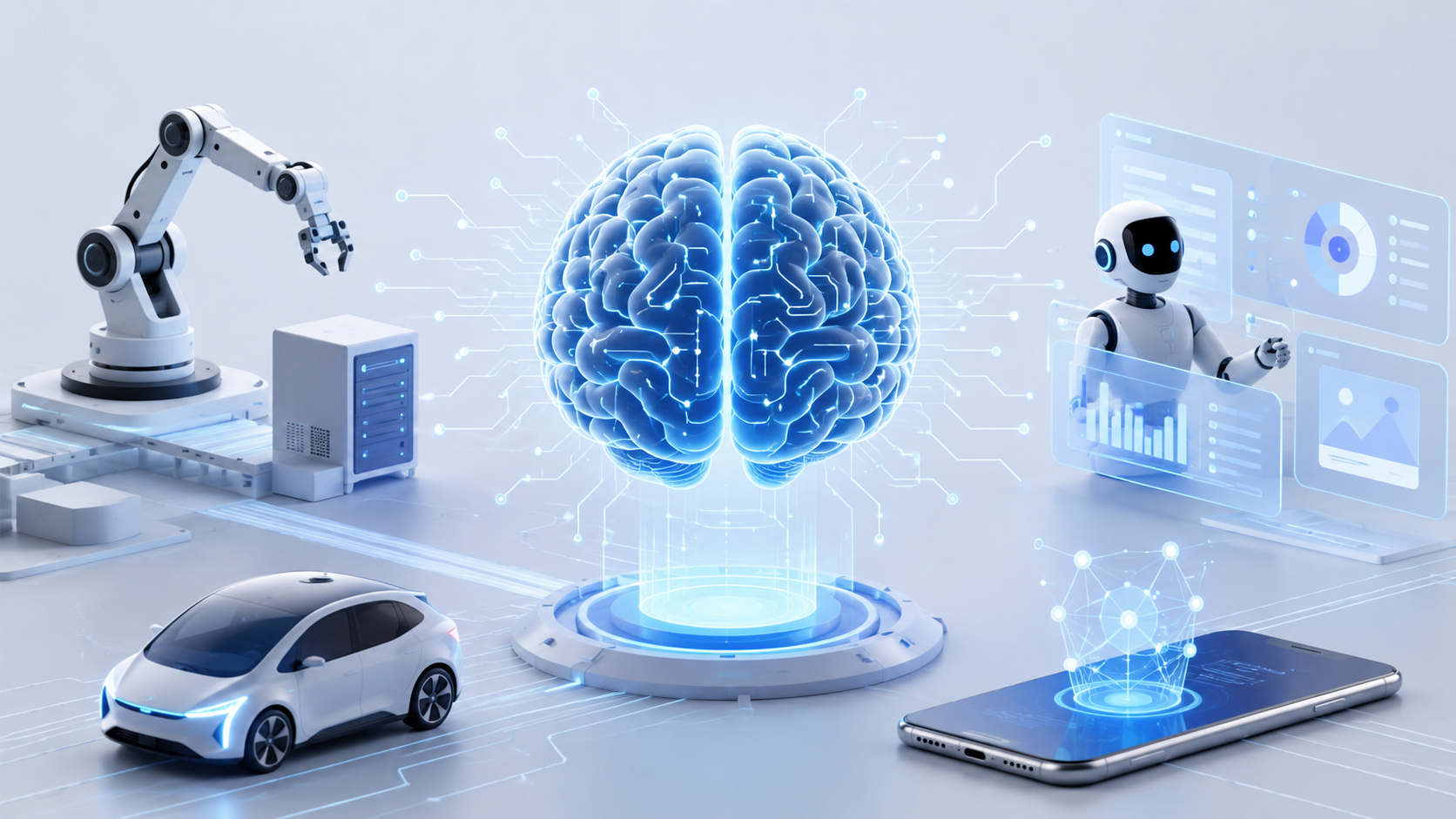
Understanding the foundation of smart computing architecture requires an understanding of how data is processed from the ground up to produce automated decisions.
The Role of Neural Networks and Deep Learning
The primary foundation of intelligent systems lies in neural network architecture inspired by biological neural structures. These systems consist of input layers, hidden layers, and output layers that are intricately interconnected. Through deep learning approaches, these networks are capable of extracting abstract patterns from massive datasets without needing to be manually programmed for every specific rule.
The training process involves continuous mathematical weight adjustments to minimize prediction error margins. This parallel processing requires highly intensive matrix computation at the hardware level.
Image Processing Through Computer Vision
Another vital component in this architecture is the computer vision system that allows machines to recognize and analyze visual information. Through pixel feature extraction, algorithms can detect edges, textures, and object shapes with precision.
This system works by dividing an image into a matrix of numbers which is then processed by convolutional neural networks. The results of this visual processing are used for various precision needs, ranging from biometric scanning to autonomous vehicle navigation.
Hardware Acceleration Mechanisms in Modern Devices
The greatest transformation in portable computing occurred when algorithm processing moved from centralized servers to local silicon on user devices.
Transition from Theoretical Algorithms to NPU Chips
Previously, algorithm processing required massive cloud server computing power. However, latency limitations and privacy issues drove the creation of dedicated Neural Processing Units (NPUs) on integrated circuits for modern smartphones and laptops.
NPUs are specifically designed to handle matrix math operations with much higher power efficiency compared to conventional GPUs or CPUs. The presence of these specialized chips allows large-scale data models to run directly on devices without needing an internet connection.
On-Device Data Processing and Power Efficiency
Processing directly on the device, or on-device, provides significant advantages in terms of speed and data security. Users no longer need to send sensitive data such as photos or voice to third-party servers for processing.
Furthermore, microcode optimization on NPUs has successfully reduced energy consumption drastically when processing repetitive instructions. This power efficiency preserves device battery life while maintaining optimal real-time processing performance.
Real-World Implementation in Gadgets and Industry Software
The application of this smart technology brings real changes to consumer gadget functionality and corporate operational software systems.
Consumer Device and Operating System Optimization
In modern gadgets, the existence of dedicated hardware significantly enhances the user experience. Smartphone cameras can perform object segmentation and lighting adjustments instantly when the shutter button is pressed.
Computer operating systems also utilize local processing for adaptive power management, dynamic memory allocation, and offline voice recognition. This integration makes human-machine interaction feel increasingly natural and responsive.
Enterprise Software Automation and Predictive Algorithms
In the business sector, implementing software based on predictive algorithms helps companies make strategic decisions based on historical data analysis. These systems can predict market trends, detect fraudulent financial transactions, and optimize supply chains independently.
This automated intelligence reduces the workload of repetitive manual tasks. As a result, organizational operational efficiency increases sharply with increasingly minimal human error.
Infrastructure Impact and Ethical Standards Regulation
The rapid evolution in this technology sector brings broad impacts to global computing infrastructure while triggering the need for regulation.
Cloud Infrastructure and Data Processing Challenges
Even as edge processing grows in popularity, the need for large-scale processing in data centers continues to increase. Cloud computing infrastructure is now required to provide more efficient power consumption while maintaining high throughput.
Global server providers are investing heavily in liquid cooling architectures and renewable energy sources. This step is taken to offset the massive computing load generated by training large-scale artificial intelligence models.
Implementing Ethical AI and Data Protection
The massive expansion of intelligent systems poses new challenges related to privacy, algorithmic bias, and user data security. The global technology community is now pushing for the strict implementation of ethical AI at every stage of software development.
Strict regulations are applied to ensure that decisions made by algorithms are transparent and free from discriminatory bias. Personal data protection has become a top priority to ensure that computing innovation proceeds in line with public safety.
Future Directions of Computing Infrastructure
Given the current pace of innovation, data processing architectures will continue to undergo deep consolidation between local hardware and distributed computing networks. The integration of increasingly compact and efficient specialized chips will make future gadgets more independent in processing complex data instantly.
Software development will also focus more on data model optimization without sacrificing user privacy. Understanding these technological dynamics helps professionals and tech enthusiasts continue to adapt to increasingly sophisticated future computing benchmarks.
Critical Discussions on Future Smart Technology
Why are NPUs more efficient than CPUs for AI technology tasks?
NPUs are specifically designed to execute mathematical matrix calculations in parallel with very low power consumption. Meanwhile, CPUs are designed for general-purpose instruction processing sequentially, making them less efficient for heavy algorithmic workloads.
Is on-device data processing completely secure from data leaks?
On-device processing significantly reduces the risk of leaks because data is not sent over the internet to external servers. Nevertheless, physical device security and operating system updates remain important factors in preventing local hacking.
What is the main difference between deep learning and standard machine learning?
Standard machine learning still requires human intervention to determine the data features to be analyzed. Conversely, deep learning uses layered neural networks capable of automatically extracting and learning data features without manual guidance.
How do smart algorithms affect smartphone battery efficiency?
Initially, algorithm processing required significant power if run by the CPU or GPU. However, with the presence of specialized NPU hardware acceleration, heavy tasks like image processing can be performed much faster with very minimal energy usage.
Will cloud networks be displaced by local NPU chips?
No, the two technologies complement each other. Local NPU chips focus on fast inference and real-time private data processing, while cloud networks are still needed for training giant data models that require massive computing power.